
You are here
News Feeds
What Happens to a Star That Captures A Primordial Black Hole?
Stephen Hawking predicted that stars can capture primordial black holes (PBH). The PBH find their way to the stellar core, creating a Hawking star. There are two possible outcomes, both deadly for the star. Either it explodes rapidly, or it's slowly consumed by the parasitic PBH.
Cuts to US ocean programme will hinder monitoring of El Niño and AMOC
Podcasting is Penetrating the Mainstream
Changes in the structure of the media in recent years have expanded the range of opinions voiced in public, broadening the so-called “Overton Window,” that is, the articulation of views that is considered to be within the bounds of acceptable discourse without being perceived as too extreme. Issues that were once considered inappropriate to discuss in polite society are now seeping into civic dialogue.
The issue of immigration is illustrative of this trend. For years, the mainstream media, particularly the prestige press, evinced a liberal bias,1 and in the United States worked to delegitimate resistance to immigration as racist. Over time, however, cable television steadily chipped away at the dominance of the big three television networks—ABC, NBC, and CBS—which led to greater market segmentation, resulting in a more fragmented media landscape. With the expansion of news outlets, immigration restrictionists today have much greater voice in the media than they did in the past. Right-wing cable news and internet sites now reflect a broader scope of opinions, which has occasioned a polarization in America’s political culture. Podcasting is accelerating this trend.
The Podcasting RevolutionPodcasting has emerged as one of the most dominant formats of contemporary media. In essence, podcasting is a form of programming made available in digital format for downloading over the internet. A portmanteau of “iPod” and “broadcast,” the term podcast was coined by The Guardiancolumnist and BBC journalist Ben Hammersley in an article that appeared in 2004.2 The year before, a program called Open Source hosted by Christopher Lydon was launched, which featured discussions on politics and culture. It is considered by some observers to be the first ever podcast.3 Since then, the format has skyrocketed in popularity. Critically, the U.S.-based social media and online video sharing platform—YouTube—enabled the proliferation of podcasting. Subsequent platforms have emerged, including Bitchute, Rumble, and Odysee, which created even more venues for podcasting and related programming.
Not unlike listening to the radio was in the past, podcasts are designed for passive consumption. People often listen to them when they are carrying out other tasks—driving, working out, doing chores, etc. According to a 2023 Pew Research Center study, roughly half of all Americans have listened to a podcast in the previous year, a figure that presumably has increased since then.4 The emergence of COVID-19 and the ensuing lockdown propelled the popularity of podcasting, as people spent time at home and tuned in for information, entertainment, and a sense of connection.5 Inasmuch as young people comprise the largest segment of podcast consumers, its popularity is projected to continue in the future.
Because podcasts are DIY enterprises with no official gatekeepers, the entry costs are low. Virtually anyone with an internet connection can launch one. Podcasts do not necessarily require a professional set or expensive cameras. Since there is no commissioning process involved, the style of podcasts is often freewheeling and uncensored. Podcasts thrive on candor. Their unfiltered nature makes them attractive to audiences jaded by the stage-managed major networks.
To many listeners, podcasts are effective venues for honest conversations. Their formats are often long, which can be more meandering, encouraging interlocutors to be more open in their discussions. With no studio audience, there is an ambience of personal conversation that encourages people to open up more.6 Podcasts offer the opportunity to connect with supporters in a more comprehensive way than previous media, thus fostering deeper connections between their hosts and their listeners. Unlike previous media formats, podcasting offers a more intimate experience, allowing hosts to share stories, insights, and expertise in a conversational tone.7
Flexibility is another key feature, as podcasts can be consumed anywhere and at any time. Although most listeners tune in to podcasts for entertainment, they often hear about news stories as well. People who listen to them can get information that they would not have heard about elsewhere.8 Moreover, when Americans hear about news on podcasts, a large proportion of them view it largely as accurate (87 percent),9 a figure substantially higher than their trust in the mainstream media.10
The fledging medium of podcasting presents an attractive vehicle for views that had previously been locked out of the public sphere.The rising popularity of social media sites, such as Facebook, Instagram, and TikTok, enable podcasters to garner large followings. With a substantial fan base, they can become self-financing. A myriad of monetization options are available. The most popular hosts earn multimillion salaries. For example, Joe Rogan rakes in on the order of $60 million a year on his podcast alone. As of 2024, the podcasting industry was valued at $2.2 billion and is expected to grow to $17.59 billion by 2030.11 The fledging medium of podcasting presents an attractive vehicle for views that had previously been locked out of the public sphere.
Tucker CarlsonSince his departure from Fox News, Tucker Carlson has gained an enormous following on social media. Although at one time his program was the highest rated news show in the history of cable television, his strident opposition to illegal immigration and the Black Lives Matter movement scared off many advertisers. Fox News dismissed him from his position in April of 2023 but provided no reason for his termination.
Undaunted, in May of 2024, Carlson launched a podcast entitled The Tucker Carlson Show, which by July of 2024 rose to one of the most popular shows on Spotify. Concomitant with his departure from the mainstream media, has been his increasing extremism. His program has hosted many controversial figures, for example the amateur historian Darryl Cooper, who appeared on the program and castigated Winston Churchill as the “chief villain of World War II.”12 In late October of 2025, Carlson sat down with the noted racialist Nick Fuentes for a cordial conversation, but soon faced severe backlash for platforming him. The incident polarized the conservative movement. Whereas Kevin Roberts, the president of the Heritage Foundation and chief author of the Project 2025 publication, defended Carlson’s decision to interview Fuentes, Fox News personality Mark Levin condemned his former colleague for platforming Fuentes.13
The Trump administration’s military intervention in Iran has also polarized the MAGA movement. Some of Trump’s most stalwart supporters have broken ranks and have become some of his most vociferous critics. After the president posted a controversial AI-generated image of himself dressed in Christ-like robes, Carlson mused that he might even be the anti-Christ.14
Candace OwensCandace Owens, a rising star in the podcast sphere, has appeared as a guest on Tucker Carlson’s programs on numerous occasions. The two have frequently praised each other’s journalism. Following the October 7, 2023, Hamas-led attack on Israel, her public remarks occasioned a very public feud with one of The Daily Wire’s founders, Ben Shapiro. Finally, Owens was dismissed from her position in March of 2024, as her comments were perceived as antisemitic by Shapiro and other members of The Daily Wire’s staff. Undaunted, she expressed relief following her termination, posting on 𝕏 “The rumors are true—I am finally free.”
Owens exudes a Patrician demeanor. Her early childhood, however, was dysfunctional and underprivileged. Born in 1989 in White Plains, New York, she described her situation as a family of six that lived in a small, three-bedroom apartment within a run-down, roach-infested building. When she was nine years old, though, her paternal grandparents took her to live with them in a middle-class neighborhood in Stamford, Connecticut, where her surroundings were much better. Reflecting on the move, she described it as one of the greatest blessings of her life.15
As a young adult, Owens identified as a liberal, though she had no interest in politics. In 2016, she created and promoted a project called Social Autopsy, an intended anti-cyberbullying platform.16 The idea was to let users submit screenshots of offensive or harassing social media posts, then build a searchable database that would link those posts to people’s real names, employers, and other identifying information. Critics from across the political spectrum immediately called it a doxxing tool or public shaming database that would enable harassment and vigilantism by de-anonymizing users. After her crowdfunding campaign aiming to fund the project was taken down for violating terms of service, Owens abandoned the idea and it never launched. Her curiosity about politics was ultimately piqued when Donald Trump courted Black voters by asking them, “What do you have to lose?” Stunned by his lack of traditional etiquette, she was soon converted. She understood the brazenness of his approach, and it eventually won her over.17
Podcasts thrive on candor. Their unfiltered nature makes them attractive to audiences jaded by the stage-managed major networks.For her rejection of the claim that racism remains pervasive in contemporary America, Owens has occasionally been derided by her detractors as a “white supremacist,” though she rejects that characterization. The Black Lives Matter movement has come under her scathing criticism. Not one to shy from controversy, one week after George Floyd’s death Owens released a video in which she condemned the protests and rejected the mainstream media narrative that Floyd was a martyr for Black America. The video went viral and was viewed nearly 100 million times in only four days. Many people praised her for having the temerity to speak “the truth.”18 Her pronouncements were not without critics, however, with the popular comedian Dave Chappelle calling her “a rotten bitch.”19
Increasingly on Owens’s podcast, the legitimacy of Israel is routinely called into question. After breaking with The Daily Wire, Owens became much more strident, even declaring the authenticity of Jewish ritual murder. In her estimation, the state of Israel was intended to be a haven for Jewish ritual child-murderers and pedophiles affiliated with the 18th-century Frankist sect.20
Owens has criticized not only Israel, but the broader Jewish diaspora. In recognition, in late 2024, she was selected as the “Antisemite of the Year” by StopAntisemitism, an advocacy group devoted to combating antisemitism and criticism of Israel.21
Despite her controversial pronouncements, Owens is still a sought-after political and social commentator. Once dubbed “the new face of Black conservatism,” Owens is enormously popular, especially with younger people. Her YouTube channel has roughly 5.97 million followers and has been viewed over a billion times. For that reason, her drift toward extreme discourse is understandably disconcerting to some quarters of the Jewish community. Ominously, it could presage a greater collaboration amongst extremist subcultures.
Nick FuentesAn important event occurred in July 2025, when Candace Owens hosted Nick Fuentes for a two-hour interview on her podcast. In the past, the two have traded barbs, but also praised each other. When Owens was released from The Daily Wire for her criticism of Israel, Fuentes instructed his followers to “stand with Candace.”22 During the July 2025 interview, there were some tense moments: Owens needled Fuentes over why he had not married and started a family. She also objected to his belief that race determined a person’s abilities and to his claim that Black civilization was inherently inferior. But the tone was generally cordial, and they agreed that the pro-Israel lobby had an outsized influence on American politics.23
The so-called “generational run” of Nick Fuentes continues to gain momentum. A master of riffing, his podcast has become immensely popular, amassing a huge following. Profiles in major publications, including The Atlantic and The New York Times Magazine, have elevated the young podcaster as practically a household name.24 Fuentes champions a form of national populism with a strong focus on race. He envisages an American nation with a strong White ethnic core. Previously, he defended the system of Jim Crow, arguing that segregation was better for both Black and White Americans. On numerous occasions, he has stridently criticized the Black community, demonstrating no compunction in using the n-word. Still, not unlike other people of his generation, Fuentes occasionally adopts a Black oppositional aesthetic. As he explains, by unapologetically using the n-word, he seeks to demonstrate that he is the “realest nigga in America.”
His racism has not precluded Fuentes from collaborating with Black public figures. For instance, Fuentes accompanied the musician Ye (formerly known as Kanye West) to press conferences and advised him on his 2024 presidential campaign. Fuentes also worked with Sneako—an online influencer with a multiracial background—to produce social media content for Ye’s electoral bid. Adding more fuel to the fire, Ye and Fuentes appeared on Alex Jones’s Infowars program in early December of 2022. On the broadcast, Ye repeatedly expressed his admiration for Hitler. Fuentes has echoed this sentiment, once describing the German Führer as “really fucking cool.”
Even many of his detractors concede that Fuentes is a very talented young man whose oratory is persuasive. In an interview with Megyn Kelly, Tucker Carlson described Fuentes as “the single most influential commentator among young men.” After the Hamas attack on Israel on October 7, 2023, Fuentes gained many followers, as more and more people tuned in to listen to his analysis on Middle Eastern affairs. Moreover, his strident denunciation of Israel and the larger Jewish community has endeared him to antisemites both on the political right and the political left. After all, his critique of Israel is arguably the rawest on the internet. He implicates a “Jewish oligarchy” as the motive force behind many of the problems that bedevil the world today. In light of his increasing notoriety, Senate Minority Leader Chuck Schumer (D) announced his intention to introduce a resolution to condemn Fuentes. This pushback, however, seems to have only elevated Fuentes’s stature in the podcast sphere, as he has become a much sought-after guest on programs, many of which are operated by Black hosts.
Jesse Lee PetersonJesse Lee Peterson, a Black conservative, has established a reputation as a no-nonsense commentator on racial issues. With roughly half a million followers on social media, he has long counseled Black Americans to work hard and be self-reliant. His background is a classic bootstraps story. Born in 1949 in Alabama, Peterson was raised by his grandparents on a plantation, where his slave ancestors once worked. His early life was marked by family fragmentation. Growing up, Peterson recalled, anger consumed him. Throughout much of his life, he projected this anger everywhere, toward his mother, his father, his friends and teachers, and especially toward White people.25 According to Peterson, fatherlessness is the root cause of dysfunction in the Black community.
In 2016, Peterson launched The Fallen State, which has become a popular podcast. Prominent white nationalist figures, including David Duke, Richard Spencer, Mark Collett, Jared Taylor, Lilly Gaddis, Leonarda Jonie, and, of course, Nick Fuentes, have appeared on the program. In one episode, Peterson urged White Americans to carve out a separate territory in the United States for a White ethnostate. He invoked the example of South Africa as a fate that faced White Americans if they failed to do so.
Some of his critics have accused Peterson of outright white supremacy. His blackness, some suggest, reduces the shock value of his opinions that would be considered beyond the pale if a White person had articulated them.26 Peterson has indeed collaborated with white nationalists in the past. For example, in 2022, he spoke at the third America First Political Action Conference (AFPAC), which was organized by Nick Fuentes. The Anti-Defamation League opined that Peterson’s speech was one of the most inflammatory at the event, as he described Blacks as the destroyers of America.27
Podcasting: A Forum for Black–White RapprochementMore and more Black conservatives are following the example of Peterson and are entering the podcasting world. The Hodgetwins—Keith and Kevin Hodge—launched their show in 2008 and have emerged as a popular team. With an estimated two million followers, they have carved out a significant niche in the podcast industry. As unabashed conservatives, they opposed the Black Lives Matter movement and have supported Donald Trump, though they do so no longer, following the U.S. strikes on Iran.
Myron Gaines, who founded The Fresh and Fit Podcast in 2020, has emerged as another popular Black podcaster. Born in Brooklyn, Gaines is of Sudanese descent and was raised Muslim. Originally, his podcast focused on issues related to the manosphere, a largely online movement that champions masculinity and opposes feminism. But after the October 7 Hamas attacks, Gaines has become a vocal critic of Israel. An avid conspiracy theorist, he implicates Israel as the main agent behind the 9/11 attacks and the JFK assassination. On an evening in January of 2026, Gaines, Fuentes, Sneako, Clavicular (a noted “looksmaxxer”), and Andrew Tate, along with his brother Tristan, sparked controversy when they attended a nightclub in Miami. The DJ played Ye’s controversial song “Heil Hitler,” during which some of the attendees appeared to perform Nazi salutes.28
The format of podcasting has expanded the boundaries of acceptable discourse, or at least has made the articulation of unpopular and controversial ideas more feasible than in the past.Perhaps one reason why Black podcasters seem amenable to Fuentes is because of the racial facts on the ground. After all, any program of forced racial expulsion and separation does not seem feasible in contemporary multiracial America. Fuentes seems to recognize this and recently called for a united populist front to include the political left, which urged to jettison its advocacy of open borders and wokeism. For the political right, he counsels abandoning their reverence for the free market.29
It can be inferred that Fuentes favors a form of national socialism not unlike historic fascism. For many of the young men of Generation Z, who face social isolation and an uncertain economic future, such a program is attractive. Fuentes has managed to craft his message is such way that it resonates with young followers of various ethnic and racial backgrounds.
♦ ♦ ♦
Whereas previously, impolitic rhetoric would often be regarded as hateful and deserving of condemnation, the irreverent nature of podcasting discourse tends to be disarming. Nick Fuentes occasionally praises Hitler and the Third Reich, but in such an ironic fashion that it does not provoke the kind of ostracism that such pronouncements would have done in the past when delivered in a more serious demeanor.
Unlike old-school white nationalist movements, this contemporary movement endeavors to create a self-sustaining counterculture, which includes a distinct vernacular, memes, symbols, and a number of blogs and alternative media outlets. Taking a page from Saul Alinsky’s Rules for Radicals, young activists have applied his tactics to conservative causes.30
The format of podcasting has expanded the boundaries of acceptable discourse, or at least has made the articulation of unpopular and controversial ideas more feasible than in the past. For many years, espousing positions such as white supremacy and antisemitism carried potentially high costs, often resulting in some type of sanction or cancellation.
Today, however, some controversial podcasters have enormous followings, enabling them to make substantial earnings and wield significant influence in politics and culture. From its humble origins, podcasting is now eclipsing much of the legacy media. Moreover, podcasting encourages frank and unfiltered discourse. This feature has done much to forge a rapprochement across various political orientations, including white nationalists, Black conservatives, far left activists, and anti-Zionists.
AI-designed universal coronavirus vaccine passes first human trial
Here’s the elk calf!
Did you spot the elk calf in Matthew Hill’s photo this morning? Here it is!

When I asked Matthew how, in the tagging process, he found the hidden calves, he replied:
Typically the cow has a vaginal insert transmitter that comes out when the calf drops, which allows us to pinpoint the birth location. Several hours later the cow and calf move a short distance off the birth location where the calf conceals itself. Say, within 50-500 m. When we arrive, the cow leaves the area but will come back within 4-5 hrs. We systematically survey the area looking for it. Really hard game of hide and seek!
Example of an “activated” vaginal insert transmitter (“vit”) recovered at birth location.
More photos from the tagging process:


More: a wolf attacked another calf, but mom apparently drove it off. Matthew:
I’ve attached pics from yesterday of a five day old calf that survived a wolf attack only hrs before we arrived. Very lucky calf. It must have been a single wolf, and the cow was able to fend it off. If two or more wolves, the cow would have bailed to live to breed another day.


Flood of AI 'garbage' is pushing open-source developers to the limit
A chromosome from a frozen rat has been resurrected inside mice
Spot the elk calf!
Reader Matthew Hill sent some photos taken during his tagging of elk calves (Cervus canadensis), and one of them qualifies as a “spot the. . . ” photo. Can you spot the elk calf, hiding from predators inconspicuously? The reveal will be at 10:30 Chicago time, along with other photos from Matthew’s endeavor. His words are indented:
I’m currently involved in tagging elk calves in northern Wisconsin. I thought one of today’s tags might be a fun one for an I spy post. Not super difficult. It’s a two-day- old female.Can you spot it? You can tell us in the comments if you did, but please don’t say where it was. Again, reveal is at 10:30 a.m. Click the photo to enlarge it.

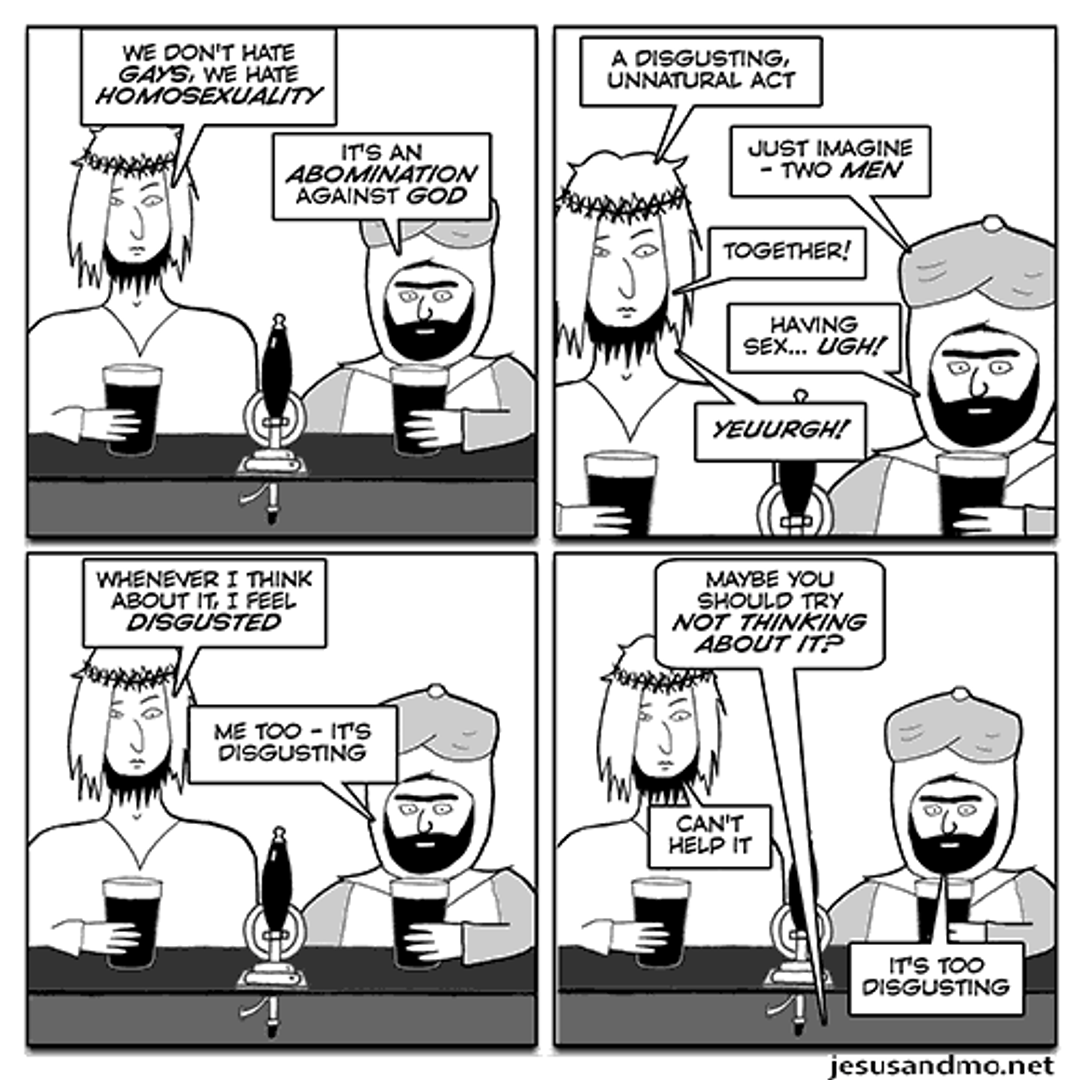
Jesus ‘n’ Mo ‘n’ Pride
The Jesus and Mo artist tells us that this strip is “a Friday flashback from 13 years ago today”. The boys abhor homosexuality, but are obsessed with it (remember, they share a bed):
Hidden supermassive black hole pairs may finally have a visible signal
Magnetic fields may be the secret behind binary star formation
Scientists discover a hidden quantum world inside cobalt
Scientists discover a hidden quantum world inside cobalt
The maths meme that has been distracting mathematicians for a century
The COVID Amnesia Project: Erasing Your Free Will to Preserve the Fantasy of the Optional Pandemic
Countless millions of Americans prioritized their health and protecting their neighbors over an imagined return to normal in 2020. Our sacrifices deserve recognition and gratitude, not amnesia and revisionist history from sheltered political scientists.
The post The COVID Amnesia Project: Erasing Your Free Will to Preserve the Fantasy of the Optional Pandemic first appeared on Science-Based Medicine.Scientists are seriously asking if bees and ChatGPT are conscious
New Cloud-Detecting Method Will Help Astronomers Characterize Exoplanets
Astronomers have developed a technique that allows them to detect cloud cycles on distant exoplanets. Using data from the James Webb Sapce Telescope (JWST), the astronomers found that mornings and evenings on the gas giant WASP-94A b have extremely different weather patterns: mornings are riddled with sand clouds, while the skies are clear in the early evenings. By isolating the clouds, researchers can more accurately measure a planet’s atmosphere and provide a clearer picture of the planet’s composition. WASP-94A b, for example, has much less oxygen and carbon than astronomers perviously calculated, making its atmosphere much more like Jupiter than they had originally thought.
Even Without A Magnetosphere, Mars Can Still Deflect Some Solar Wind
New research shows how unmagnetized worlds like Mars can still deflect some of the Sun's solar wind. Unlike magnetospheres that form around planet's like Earth, this effect takes place in Mars' ionosphere. It's called the Zwan-Wolf effect, and it's not clear how deep into the atmosphere it operates.
The Anti-Woke Case for Not Banning Gender Studies
Among critics of “wokeness,” an increasingly heated debate has emerged about what should be done about university disciplines shaped by postmodern-derived Critical Social Justice theories—most notably Gender Studies. Some argue that these fields should be dismantled entirely. Others believe they should be reformed to operate under the normal standards of academic inquiry.
The Reform vs. Abolition DebateThe term “woke” originated in Black American history to describe awareness of real and widely recognized systemic injustice, as in being alert to the very real oppression going on in society. In its contemporary usage, however, it has expanded to refer to a theoretical framework in which social injustice is understood to be embedded in the assumptions and biases we are all said to have been socialized into, but be largely unaware of—White supremacy, patriarchy, colonialism, and cis/heteronormativity. Critics have adopted the term disparagingly because it reflects the central problem with this framework: that its adherents believe themselves to possess a critical awareness of hidden systems of power, while those who question them are implied to remain asleep.
Throughout history, ideological movements convinced of their own correctness have adopted similar assumptions. They begin with the premise that they are right and then seek ways to explain away why this is not evident to everybody else. Rather than accept disagreement as legitimate and engage with it, they devise frameworks, which hold that others are ignorant or willfully oblivious. We see this in religious traditions, in which nonbelievers are described as blind while converts are said to have “seen the light,” and in contemporary culture through concepts such as being “red-pilled”1, 2 (drawn from The Matrix), in which only those who have awakened can perceive reality as it truly is.
The core problem with this epistemology is that it renders itself unfalsifiable and impervious to critique or self-correction. Criticism is preemptively dismissed as further evidence of its central claim: that most people remain blind to social reality. Critics broadly agree that such circular reasoning is incompatible with rigorous academic inquiry. Universities exist to produce knowledge, which requires supporting hypotheses with evidence, accepting attempts at falsification, and engaging in open scholarly critique. Where critics differ is in how to respond when academic disciplines fail to meet these standards. Some argue that such fields should be reformed to meet them, while others believe they should be dismantled altogether.
Gender Studies as a Test CaseMany identity-based academic fields draw on these theories, but many recent debates have focused on Gender Studies, which provides a useful test case. In considering whether it should be reformed or abolished, two questions are especially important.
First, are the subjects it addresses—sex, gender, and sexuality—important aspects of human life, about which it is valuable to develop reliable knowledge and careful ethical reasoning? Given that human beings are a sexually dimorphic, sexually reproducing species, I submit that the answer is yes.
Second, what kind of intellectual environment is most likely to produce that knowledge and ethical reasoning? One possibility is a reformed university environment that upholds viewpoint diversity, interdisciplinary research, high evidentiary standards, and robust critique. The alternative is to remove the subject from academia altogether, leaving discussion of these issues largely to ideologically homogeneous alternative spaces.
Since the problems within Gender Studies emerged from the dominance of a single theoretical framework, and that dominance has produced poor scholarly outcomes, reforming the field to meet the standards of rigorous academic inquiry seems the better option. The core issue is not whether the study of sex, gender, and sexuality should exist, but whether any single theoretical framework should be insulated from the standards of evidence and critique that define academic inquiry. Indeed, reforming the field and displacing its current theoretical framework may ultimately be the same project.
This debate reflects a broader philosophical and epistemological divide across contemporary culture between those who prioritize individual liberty and plurality, and those who seek to impose a single vision of the common good on everybody. Do we want to preserve a society in which individual liberty, viewpoint diversity, and the free exchange of ideas are valued? And do we believe that such a society provides the best way to discover truth, reconcile differences, and consign bad ideas to the dustbin of history?
A Case Study: Simovski and HaltiganThe conflict between the “reform” and “abolish” positions was recently illustrated in a disagreement between Nicole Barbaro Simovski, a social scientist and Director of Communications at Heterodox Academy, and J.D. Haltigan, Professor of Developmental and Evolutionary Psychopathology. In “Viewpoint Diversity vs. Women’s and Gender Studies,”3 Simovski addresses the problem of academic departments that have become ideologically dominated by Critical Social Justice theories. She considers the debate over whether such fields should be required to introduce greater viewpoint diversity or dismantled altogether, and argues for the former approach. As she concludes:
The most pressing question facing higher ed—and its leaders—right now is not necessarily whether ideologically homogeneous departments should be preserved as-is or dismantled altogether (though we’re seeing the latter already in some places), but whether universities are willing to do the harder work of reopening them to genuine inquiry. Viewpoint diversity is not just a box-checking exercise; rather it is a requirement for knowledge production and teaching. When it is absent, disciplinary progress stagnates, students unenroll, and the door is opened for political actors to step in to resolve the problems universities have avoided.Simovski’s proposal is to bring different approaches to the study of sex, gender, and sexuality into dialogue so that competing hypotheses can be tested against each other through normal scholarly processes. Haltigan responded bluntly, “[This is] the problem with Heterodox Academy in a nutshell. You don’t introduce viewpoint diversity into something like ‘Gender Studies.’ You abolish it. It is not science. It is not knowledge. It has no place in the university.”4 Here, Haltigan is likely referring to the “Critical” theoretical framework that currently dominates the field, rather than to any study of sex, gender, or sexuality. But Simovski’s argument is precisely that opening the field to more rigorous forms of critical inquiry would allow those topics to be studied in ways that meet normal academic standards.
Simovski replied by arguing for the value of bringing different disciplinary approaches into dialogue. For example, biological evidence about the distribution of sex traits could be examined alongside sociological analyses that attempt to explain why theories of a “sex spectrum” arise. Doing so allows scholars to consider the strongest version of the “spectrum” claims while also presenting the case for a sex binary grounded in biological evidence. In her view, excluding either sociological or biological approaches would simply shut down inquiry rather than advance understanding.5
A framework that regards evidence, reasoned argument, and falsifiability as tools of oppression cannot participate in the processes through which universities produce knowledge.There is, of course, a profound difference between empirical sociological research that studies the different beliefs people have about sex, gender, and sexuality, and Gender Studies rooted in Queer Theory that is opposed to such rigorous sociological research on principle. In her piece, Simovski does not go into detail about what it might look like in practice to bring together scholars working within these very different epistemological frameworks. I will consider that question below. Simovski’s concern is instead the broader principle of interdisciplinary collaboration and viewpoint diversity.
The problem is the theories, not the subject.On that broader principle, I agree with Simovski. Fields addressing sex, gender, and sexuality should be opened to genuine critical inquiry and include scholars from relevant disciplines. These are complex subjects that intersect with multiple areas of scholarship. Biology is central to the study of sex and reproduction; evolutionary and cognitive psychology can illuminate questions about psychological sex differences; sociology helps us understand how different groups conceptualize sex, gender, and sexuality; and philosophy offers competing frameworks for addressing their ethical dimensions, including gender-critical feminism and social conservatism.
However, I also agree with Haltigan that the theoretical framework currently defining Gender Studies cannot be sustained under the normal standards of academic inquiry. This is not simply one perspective among many whose claims can be weighed against competing hypotheses. To the extent that postmodern-derived theories, including Queer Theory, reject the possibility of objective knowledge, treat evidence, reason, and debate as instruments of oppressive power, and resist falsification, they do not meet the basic criteria by which academic claims are evaluated. A framework that regards evidence, reasoned argument, and falsifiability as tools of oppression cannot participate in the processes through which universities produce knowledge.
Illustration by ALE+ALE for SKEPTICMy own stance on theories such as Queer Theory is informed by having studied them intensively for 17 years, both inside and outside the academy. These approaches are often deliberately obscure and counterintuitive, which means that many people support or oppose them on the basis of political alignment rather than a clear understanding of their claims. Yet when those claims are made explicit, they can be assessed against the same standards applied elsewhere in academia.
Many people, for example, assume that supporting the rights of same-sex attracted and gender-nonconforming individuals requires endorsing Queer Theory. In fact, most people in those categories do not subscribe to it, and many object strongly to being “queered.” Historically, greater social acceptance of homosexuality and gender nonconformity emerged alongside the development of biological and psychological research, which treated these traits as natural variations within a sexually reproducing species, rather than as moral or political categories.
By contrast, Queer Theory interprets sex, gender, and sexuality through political and discursive frameworks. It seeks to destabilize categories of sex, gender, and sexual orientation and to understand them chiefly in terms of power relations and identity. In doing so, it rejects the biological foundations of sex, and demands affirmation of gender identity as a form of political activism in place of empirical inquiry to discover what is true, or philosophical debate to consider what is ethical. It can plausibly be argued that this shift has undermined earlier progress toward social acceptance—an empirical and philosophical question best examined within a reformed academic environment where competing arguments can be tested.
This is precisely why the positions associated with “reform” and “abolition” are not, in fact, opposed. Opening this area of study to genuine viewpoint diversity would not preserve these theories in their current form; it would require them to defend their claims under conditions in which those claims can be tested. To the extent that they cannot meet those conditions, they will not endure.
Reform as the Most Effective Way to Abolish Bad IdeasWhat would it actually mean to open Gender Studies to genuine critical inquiry? Two basic requirements would be necessary:
- genuine viewpoint diversity and
- a clear expectation that scholars acknowledge competing hypotheses and respond to criticism in accordance with normal academic practice.
The study of sex, gender, and sexuality is not inherently illegitimate, and opening it to rigorous inquiry would mean including scholars from disciplines that examine these subjects using established methods, including biology, psychology, sociology, and relevant philosophical frameworks. Scholars would be expected to present their claims alongside competing explanations and respond directly to criticism—standard practice across academia, where hypotheses are proposed, alternatives considered, and evidence weighed through ongoing debate.
Under these conditions, students would encounter a genuinely pluralistic intellectual environment. They could examine questions about sex, gender, and sexuality from multiple perspectives, while understanding how those perspectives differ and how well they are supported. Claims about the sexually dimorphic nature of humans, or about the nature of sexual orientation, or individual variation in traits considered masculine or feminine could be evaluated biologically. Questions about gender roles could be explored through evolutionary psychology, empirical sociology, gender-critical feminism, liberal individualism, or social conservatism.
Unlike fields such as biology, which are defined by a shared methodological framework, Gender Studies is a more conceptually open field concerned with the study of “gender.” As such, it has no clear basis for restricting itself to a single theoretical approach. Indeed, it emerged from Women’s and Feminist Studies and includes a long tradition of scholarship critical of the very concept of gender, making the exclusion of gender-critical perspectives particularly difficult to justify on academic grounds.
Scholars within Gender Studies would also be expected to engage with interdisciplinary critique of their own research or theoretical papers. It would not be acceptable to declare certain claims, such as those relating to gender identity “not up for debate,” or to dismiss skepticism of it as a denial of people’s right to exist, or engage in any moves to prevent knowledge claims from being tested and refined. The expectation would be that disagreement would be engaged with as it actually is. In Who’s Afraid of Gender?6 feminist and queer philosopher Judith Butler defines an “anti-trans ideology movement” and then declares it contradictory and incoherent. She does so by conflating socially conservative views that endorse traditional gender roles with gender-critical feminist views that reject them, even though these have been utterly opposed to each other for decades and, arguably, centuries.
It would be far more productive to examine these competing perspectives directly. Consider the value of an open debate between gender conservatives, who see gender roles as a natural expression of sex differences important to societal health; gender- critical feminists, who see them as oppressive social constructs harmful particularly to women; gender identity “queer” theorists, who argue that an internal sense of gender is ubiquitous and more fundamental than biological sex; and evolutionary psychologists, who recognize both significant psychological sex differences and individual variation, typically without drawing prescriptive conclusions.7 A university setting is precisely the place where such views can be compared rigorously, their assumptions examined, and their evidential support assessed.
Where better to undertake this kind of analysis than within a university’s Gender Studies department?
If such reforms were applied consistently, several outcomes would be likely. The most committed adherents of postmodern-derived queer theory would likely leave the field. Because their theoretical framework treats debate, evidence, and falsification as mechanisms through which “dominant discourses” maintain power, a system that requires open argument and engagement with competing evidence therefore conflicts with the ethics and epistemology of the theory itself. Rather than defending their claims under those conditions, many would likely choose to resign. They might present this as having been forced out, but since they had been welcomed to meet standard academic expectations, such claims would be less likely to persuade a broader audience or generate the kind of backlash that often accompanies perceived suppression.
Liberal societies create conditions in which disagreements can be contested through argument and evidence rather than through coercion and force.Some might remain and attempt to defend their ideas in direct comparison with approaches grounded in biology, psychology, empirically rigorous sociology, or competing ethical frameworks. In that case, students and scholars would be able to assess clearly how those theories perform when subjected to the same standards of evidence and critique that apply elsewhere in academia. They are highly unlikely to fare well. Those who fear that simply allowing such ideas to be expressed will make them more persuasive may underestimate either the poverty and incoherence of Queer Theory or the ability of students and scholars to evaluate arguments critically.
This is how flawed ideas are properly and lastingly defeated.
Importantly, such a reform would also preserve intellectual fairness. On the possibility that critics are mistaken and have missed demonstrable valuable insights from Queer Theory, a reformed academic environment would allow it to demonstrate that. Theories that survive open scrutiny deserve to endure; those that cannot lose credibility.
Either way, the result would be the same: ideas about sex and gender would be evaluated through evidence and argument rather than protected through ideological insulation.
Why Censorship BackfiresThere are always those who argue that allowing ideas to be expressed and debated strengthens them. This view rests on a strongly social constructivist assumption: that people are socialized into accepting dominant discourses uncritically. From this perspective, harmful ideas must be suppressed rather than challenged. Advocates therefore support banning, penalizing, or “no-platforming” views they regard as dangerous so that only approved perspectives are widely encountered.
This logic has long motivated Critical Social Justice activists seeking to control permissible discourse within universities, but it also appears among some of their opponents. Conservative activist Christopher Rufo, for example, has argued explicitly for emulating this strategy of Critical Theorists in order to replace “woke” discourses with conservative ones through institutional control.8
Those who value the free exchange of ideas for the purposes of knowledge production and conflict resolution reject this approach consistently. They argue that suppressing ideas violates freedom of belief and expression, and that bad ideas are best defeated by exposing them to criticism. Universities, in this view, are precisely the place where flawed ideas should be tested, debated, and, where necessary, dismantled. This is not a “soft” approach. It is precisely because I regard these theories as deeply flawed that I argue they should be exposed to open scrutiny rather than suppressed. Suppression protects ideas; scrutiny exposes them.
The historical record provides little support for the claim that censorship achieves its intended aims. As uncompromising free speech advocates Greg Lukianoff and Nadine Strossen argue in their paper “Would censorship have stopped the rise of the Nazis?”9 attempts to suppress extremist movements frequently have the opposite effect of strengthening them. Attempts to suppress ideas typically make them more attractive and give their proponents the glamour of being persecuted by the establishment for being the holders of The Truth “they” don’t want you to know. We see clear examples of this dynamic more recently.
Did the speech policing and cancellation tactics of the Critical Social Justice movement in the United States reduce racism and sexism or increase acceptance of gender identity? Or did they provoke resentment, contribute to the growth of alternative media spaces, and fuel an anti-woke backlash, alongside declining support for LGBT-related policies?10 The causes of Donald Trump’s election are complex and contested, but resentment toward identitarian activism is widely cited as a motivating factor. Even those who view his election positively would acknowledge that it was not the outcome intended by censorious activists.
Suppression protects ideas; scrutiny exposes them.Similar questions arise in the United Kingdom. Did efforts to censor criticism of gender identity and immigration policy increase acceptance of trans identity and a more pro-immigration stance among the general public? Or did this lead to widescale resistance in which Britain became known as “TERF Island”11 while Reform, campaigning on an anti-immigration platform, rapidly gained unprecedented support and overtook the two established parties in popularity?12 Whatever one’s evaluation of these developments, they run counter to the aims of those advocating censorship.
It is, of course, possible to argue that these developments would have occurred regardless, or even more rapidly, without attempts to restrain them. But claiming that the rise of the antiwoke had nothing to do with resentment at the authoritarian tactics of the woke requires dismissing a large body of public reaction to overreach. At minimum, these cases provide disconfirming evidence for the position that censorship is a good way to make disapproved ideas go away.
The Authoritarian CycleOne striking feature of this dynamic is that many critics of wokeness on the political right readily acknowledge that censorship by Critical Social Justice activists helped provoke the recent anti-woke backlash. Some go further, portraying right-wing illiberalism as simply a response to left-wing excess. Yet the reasoning often stops there. The likelihood that adopting similarly authoritarian tactics might produce a comparable backlash against them is rarely considered. There is little reason to think the dynamic that undermined the authority of the identitarian left would not eventually undermine their own movement as well.
One explanation may lie in a common psychological tendency: those deeply convinced of their own correctness often assume that, once opposing views are suppressed, others will eventually come to recognize the truth of their position. Their ideas, they imagine, will then remain dominant indefinitely—a belief that might be described as “real authoritarianism has never been tried.”
In reality, authoritarianism has been tried repeatedly. Throughout history, systems built on the imposition of a single ideological orthodoxy have tended to produce cycles in which one dominant ideology replaces another, each suppressing dissent until it is eventually displaced in turn. The only political arrangements that have shown any lasting success in interrupting this cycle have been liberal democracies. By protecting freedom of belief and speech and by building institutions that support viewpoint diversity, liberal societies create conditions in which disagreements can be contested through argument and evidence rather than through coercion and force.
Unfortunately, this insight remains deeply counterintuitive to many people. Advocating viewpoint diversity often provokes impatience or frustration. Liberal commitments to open debate are frequently caricatured as a kind of polite pluralism in which everyone expresses their opinions indefinitely while congratulating themselves on their open-mindedness and nothing ever gets resolved. From this perspective, insisting on viewpoint diversity appears to be a naive half-measure or an unwillingness to confront bad ideas decisively. It is often portrayed as an idealistic defense of abstract freedoms in a world where, many believe, material realities demand more forceful action.
I believe this is mistaken. While individual liberty certainly does matter as a principle in itself, and upholding it consistently is fundamental to protecting the founding principles of liberal democracies like the United States of America, there is also a strategic and pragmatic argument for defeating bad ideas with better ones. It works. If we compare Western liberal democracies, which have at least imperfectly protected individual liberty, open debate, and viewpoint diversity, with societies that have not—or with those same societies before they developed liberal democratic institutions—the advantages of this system become clear. Liberal institutions have proven far more effective at producing knowledge, resolving social conflicts, and advancing human rights.
Illustration by ALE+ALE for SKEPTICWhere do we go from here?The United States now has a window of opportunity to reform its universities by opening disciplines captured by a single, deeply flawed ideology to genuine inquiry, interdisciplinary critique, and viewpoint diversity. Doing so would allow those theories to be examined and challenged in ways that are both legitimate and lasting.
Attempting instead to suppress such ideas would have the opposite effect. It would shield them from the scrutiny that universities are uniquely positioned to provide, removing precisely the conditions under which they would be forced to defend themselves against criticism—and ultimately fail to do so. Rather than losing credibility, they would be able to retreat while plausibly claiming persecution, a narrative that historically tends to increase both their glamour and public sympathy.
Should public opinion shift and a future election bring a different political party to power, those who attempted to suppress woke ideas may find they have unintentionally created ideal conditions for those ideas to return with renewed strength. More importantly, they will have helped entrench the norm that governments may determine which ideas are permissible within universities. If academic inquiry can be regulated by the state today to eliminate woke ideas, it can just as easily be regulated tomorrow to eliminate ideas that challenge a different political orthodoxy.
Universities would then find themselves in the extraordinary position of having the boundaries of legitimate scholarship shift with every electoral cycle. Institutions that are meant to produce knowledge would instead become instruments of whichever political faction happened to hold power at the moment.
That is not how knowledge is produced in a liberal society.
The Unexpected Brightness 'Gap' in an Ancient Globular Cluster
Scientists using the Euclid space telescope found a red-dwarf brightness “gap” in the population of a globular cluster—an ancient, crowded collection of stars. A similar gap was detected by the Gaia observatory in nearby stellar populations, but it has never before been seen in a globular cluster.
Pages
